How Do Electronic Learning Toys Encourage Creativity?

Time:2026-10-16 Author:Isabella
0%

Electronic learning toys are changing how children explore sound, movement, language, and problem-solving. A talking science kit may ask a child to predict what will happen, while a programmable robot turns a cardboard box into a moving invention. These moments raise an important question: how do electronic learning toys encourage creativity?

Research suggests that creativity grows through active play, experimentation, and meaningful feedback. UNICEF’s Learning Through Play report explains that playful experiences support children’s cognitive, social, emotional, and physical development. The OECD’s PISA 2022 Creative Thinking framework also defines creativity as producing, evaluating, and improving ideas, rather than simply giving unusual answers. Well-designed electronic toys can support these processes through open-ended challenges, adjustable difficulty, and immediate responses. A child can change a robot’s route, hear a different musical pattern, or rebuild a digital story after failure.

The technology itself is not the creative force. Not every gadget helps. The toy’s design, adult guidance, and the child’s freedom to make choices matter more. The World Economic Forum’s Future of Jobs Report 2025 lists creative thinking among the skills employers increasingly value, strengthening the case for early practice. However, evidence remains incomplete. Some products reward button pressing instead of original thinking, and excessive instructions may narrow exploration. A useful toy leaves room for surprise. It also invites children to explain their choices, revise their ideas, and create something that was not demonstrated first. That distinction matters. Creativity needs technology, but it also needs time, imagination, and thoughtful human interaction.
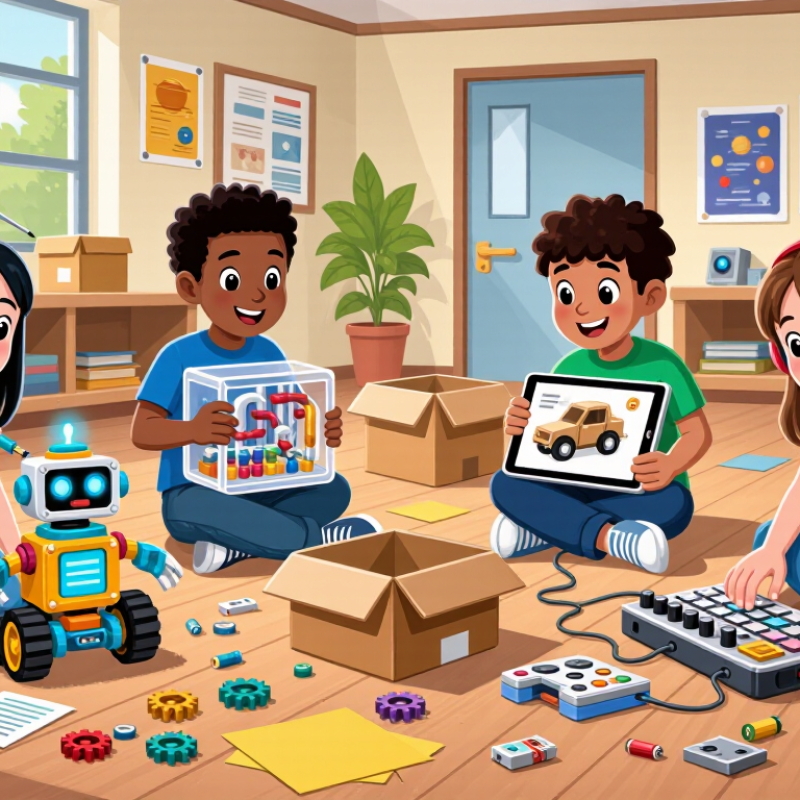
How Do Electronic Learning Toys Encourage Creativity?

What Electronic Learning Toys Are and How They Work

Electronic learning toys combine physical play with simple digital systems. They may include buttons, touch surfaces, motion sensors, lights, speakers, or small programmable processors. When a child presses a button, the sensor detects an action. The processor then selects a sound, question, movement, or visual response. This quick feedback helps children connect actions with results. A talking puzzle, for example, may recognize a correct shape and offer a gentle sound.

Many toys use levels, timers, or changing challenges. Some respond to repeated actions and adjust the difficulty. Others provide open-ended tools, such as digital drawing, music-making, coding blocks, or story-building prompts. These features can encourage creativity because children test ideas and see immediate consequences. They can change a rhythm, combine sounds, or invent a different solution. The toy becomes a small laboratory.

However, electronic feedback does not automatically create creative thinking. A child may simply follow instructions and repeat the same answer. I have also noticed that bright sounds can distract from the original task. Quiet exploration still matters. Caregivers can ask, “What else could it do?” or invite children to explain their choices. Open questions often produce richer play than constant praise. The best designs leave room for mistakes, pauses, and unexpected results. Some responses may be inaccurate or limited, so adults should check information and help children question the toy’s suggestions.

How Interactive Features Stimulate Imagination and Idea Generation

Electronic learning toys can turn a simple activity into a small laboratory for ideas. Interactive features, such as buttons, sensors, lights, and responsive sounds, give children immediate feedback. That response helps them test a thought and change it. A child may press one button to create a rhythm, then add another sound and invent a character for the pattern. The toy becomes a partner in imaginative play, not merely a device that gives answers.

Open-ended prompts are especially valuable. “What happens next?” encourages children to build stories, solve problems, and connect unrelated objects. A programmable toy might invite a child to guide a robot through a cardboard maze. The child predicts, adjusts, and tries again. Mistakes become visible and useful. That matters. Creativity usually grows through revision, not instant success.

From a learning perspective, responsive play supports experimentation and independent decision-making. However, too many flashing effects or fixed instructions can narrow imagination. I have noticed that children often create richer ideas when the toy pauses and leaves room for silence. Adults can help by asking, “Why did you choose that?” rather than correcting every step. The answer may be unexpected. It may also be incomplete. That unfinished idea can lead to a drawing, a new rule, or an entirely different game.

How Open-Ended Play Supports Experimentation and Problem-Solving

How Do Electronic Learning Toys Encourage Creativity?

Open-ended electronic learning toys give children room to test ideas without one correct result. A child might connect light, sound, and movement in an unusual order. The toy responds immediately, making each attempt visible. That feedback encourages experimentation rather than passive button pressing. In my observations, children often repeat a failed action, then change one detail. Sometimes the result seems accidental. That accident can become a new idea.

For example, a child may build a simple sequence with sound tiles and motion sensors. If the sequence stops too early, the child can move one tile or adjust the timing. This small problem invites prediction, testing, and revision. These are practical problem-solving habits. The child also explains choices aloud, such as, “It needs more time.” Such language shows developing reasoning, although a single play session cannot prove long-term creative growth.

Adult guidance matters, but too much instruction can narrow the experience. A useful response might be, “What could you change?” rather than giving the answer. Children need quiet time to explore, including moments when nothing works. I have sometimes expected a clear final product, yet the child valued the process more. That is an important correction. Open-ended play may look messy, slow, or repetitive. Still, those details can reveal persistence, flexible thinking, and personal invention.

How Feedback and Adaptable Challenges Build Creative Confidence

How Do Electronic Learning Toys Encourage Creativity?

How Feedback and Adaptable Challenges Build Creative Confidence

Electronic learning toys can support creativity when they respond to a child’s choices. A child may press three keys, hear an unusual rhythm, and change the pattern. This immediate feedback shows cause and effect without demanding one correct answer. It also makes experimentation feel safe. Small changes matter.

Adaptable challenges are especially valuable. When a task becomes harder after repeated success, children can stretch their skills without feeling overwhelmed. A puzzle might add one piece, reduce visual clues, or invite a new sequence. If the child struggles, the activity can offer a simpler step instead. This gradual adjustment builds creative confidence because effort produces visible progress.

In educational settings, effective feedback is specific and useful. “Try changing the order” encourages thinking more than a repeated sound or a bright reward. Caregivers can watch how children respond, then ask open questions about their choices. However, electronic guidance is not automatically creative. Too many signals may interrupt concentration, while rigid prompts can limit imagination. Some children may also follow rewards instead of exploring freely. That weakness deserves attention. The strongest designs leave room for mistakes, pauses, and surprising solutions, while adults protect time for hands-on play beyond the screen.

How Do Electronic Learning Toys Encourage Creativity?

How feedback and adaptable challenges build creative confidence

Electronic learning toys can support creativity when they provide timely feedback, adjust difficulty to a learner’s progress, and encourage reflection during problem solving. The chart shows average effect sizes reported in education research for related learning approaches. Larger values indicate stronger average improvements compared with conventional instruction.

Measurement: standardized mean difference (Cohen’s d). Sources: Hattie, J. (2009), Visible Learning; Hattie, J. (2012), Visible Learning for Teachers. These are general education findings, not estimates for a specific toy, company, or brand.

How Children Apply Creative Skills Through Collaborative Play

Electronic learning toys can encourage creativity when children use them together, not alone. A glowing puzzle, programmable robot, or sound-based game gives children materials for shared invention. One child may suggest a story, while another controls the toy’s movements. Their ideas develop through conversation, trial, and playful disagreement.

Collaborative play turns simple features into creative challenges. Children might build a rescue mission, assign roles, and change the rules halfway through. They practice listening, explaining choices, and combining different solutions. When a robot follows the wrong path, children test new commands instead of accepting the first result. Small failures matter.

The result is rarely tidy. That is useful. A quiet child may become the group’s storyteller, while a confident child learns to wait. Adults can support this process by asking, “What could happen next?” rather than fixing every problem. Child-development research connects open-ended play with flexible thinking, but electronic toys do not create creativity automatically. If the activity becomes a race for points, cooperation may disappear. I have also noticed that some children focus more on buttons than ideas. They may need fewer controls, more time, and a clear invitation to invent together.

FAQS

How can electronic learning toys stimulate a child’s imagination?

Buttons, lights, sensors, and sounds create immediate responses. A child can turn a simple rhythm into a character, story, or game.

Why are open-ended prompts useful for creative play?

Questions like “What happens next?” encourage children to connect objects, invent rules, and develop unfinished stories.

How does a programmable toy support problem-solving?

A child might guide a robot through a cardboard maze. They predict, adjust directions, and try again after mistakes.

Do mistakes help children become more creative?

Yes. Mistakes show what changed. Children can revise a sequence, redraw a path, or invent a different solution.

How does feedback build creative confidence?

Immediate feedback shows cause and effect. A child hears a new rhythm after pressing three keys and feels encouraged to experiment.

What are adaptable challenges?

They change with the child’s progress. A puzzle may add one piece, reduce clues, or offer a simpler step when needed.

Can too much electronic stimulation limit imagination?

It can. Flashing lights, repeated sounds, and fixed instructions may interrupt concentration or encourage reward chasing.

How can adults support creative play?

Ask, “Why did you choose that?” Avoid correcting every step. Leave time for silence, drawing, cardboard building, and hands-on play.

Are electronic learning toys always creative?

No. Their value depends on design and use. I may overestimate technology sometimes; quiet pauses can inspire richer ideas.

What makes an electronic learning toy more imaginative?

It should respond to choices while allowing mistakes, pauses, and surprising solutions. One correct answer is rarely enough.

Conclusion

Electronic learning toys combine digital components, sensors, sounds, lights, and responsive activities to create engaging learning experiences. By reacting to a child’s choices, these toys turn play into an interactive process rather than a fixed sequence of instructions. This explains how do electronic learning toys encourage creativity: they invite children to imagine possibilities, make decisions, test ideas, and discover different ways to reach a goal. Interactive features can inspire storytelling, design, building, music-making, and other forms of original expression.

Open-ended activities also encourage experimentation and problem-solving because children can try, adjust, and try again without fearing failure. Immediate feedback helps them understand how their choices affect results, while adaptable challenges provide support at an appropriate level and gradually build creative confidence. When children play together, they exchange ideas, negotiate roles, and combine different solutions. Through this collaborative process, they develop communication, flexibility, curiosity, and the confidence to apply creative skills in new situations.

Isabella

Isabella

Isabella is a dedicated marketing professional with a sharp focus on driving brand growth and engagement through strategic content creation. With an extensive background in digital marketing, she combines her passion for storytelling with her keen understanding of industry trends to deliver......