How to Choose Effective Interactive Learning Toys for Education?

Time:2026-10-21 Author:Mason
0%

Choosing interactive learning toys requires more than bright colors, sounds, or app connections. The best options connect play with a clear learning purpose. The LEGO Foundation and UNICEF’s Learning through Play report emphasize active engagement, meaningful interaction, and social connection in early learning. These principles remain useful when comparing construction sets, coding robots, sensory kits, and language-based toys.

So, why are interactive learning toys effective for education? Research suggests that guided play can support problem-solving, communication, self-regulation, and motivation. A meta-analysis by Sailer and Homner in Computers & Education found that well-designed gamification can improve learning outcomes, although results depend on the activity and learning goal. The American Academy of Pediatrics also describes play as important for cognitive, social, and emotional development. The device alone is not the teacher.

Selection still requires caution. The Joan Ganz Cooney Center’s research on children’s digital media use highlights the value of age-appropriate design, adult support, and purposeful content. Meanwhile, toy industry reports from Circana show continuing interest in educational and technology-enabled toys, but popularity does not prove educational quality. Some impressive products still create noise without understanding. That is a weakness worth admitting.

A reliable evaluation should examine feedback quality, child safety, accessibility, privacy protection, durability, and opportunities for open-ended play. Watch the child using the toy. Do they explain, build, test, and revise? Or simply press buttons? This guide explores evidence-based criteria for choosing interactive learning toys that support real classroom and home learning.
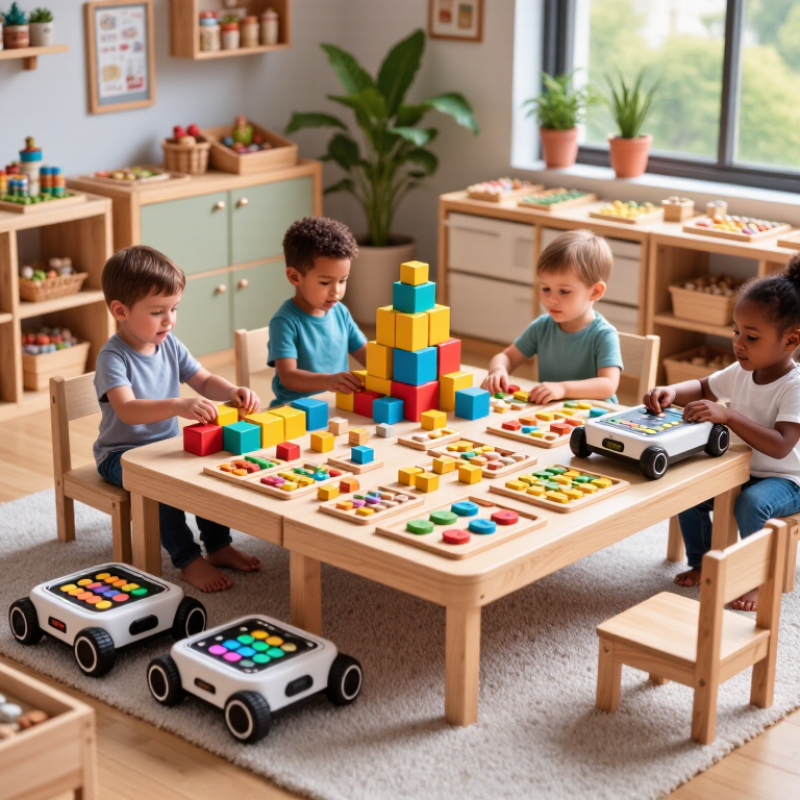
How to Choose Effective Interactive Learning Toys for Education?

Understanding the Role of Interactive Learning Toys in Education

Interactive learning toys help children connect ideas with action. A counting game turns numbers into buttons, sounds, and visible patterns. This immediate feedback can strengthen attention and encourage children to try again. In classroom practice, educators often observe more meaningful learning when children explain their choices aloud. A toy becomes more valuable when it supports language, problem-solving, movement, and cooperation.

Choosing an effective toy requires a clear learning purpose. A puzzle with adjustable pieces may develop spatial reasoning without overwhelming beginners. A sound-based activity can support phonemic awareness, but only if the audio is accurate and easy to understand. Look for simple controls, durable materials, and feedback that guides rather than distracts. A child should be able to touch a button, make a prediction, and notice what changes. Accessibility matters too. Large controls, visual cues, and flexible difficulty can include children with different abilities.

Not every interactive feature improves education. Bright lights may attract attention while weakening concentration. I have also seen children follow instructions mechanically without understanding the concept. That is a warning sign. Adults should watch, ask open questions, and allow quiet exploration. The strongest learning may happen after the toy is turned off, when children rebuild the activity with blocks, drawings, or spoken explanations. Educators should review the toy regularly, because a device that worked last month may now be too easy, repetitive, or limiting.

Identifying a Child’s Learning Goals, Age, and Developmental Needs

Choosing an interactive learning toy begins with the child, not the product. Identify one clear goal, such as naming colors, practicing turn-taking, or strengthening hand control. A four-year-old matching game may challenge a toddler but frustrate a six-year-old. Watch first. Notice how the child grips pieces, follows directions, and reacts to mistakes. These details reveal more than an age label alone.

Match the toy with developmental needs and daily interests. For language growth, choose toys that invite conversation, pretend play, or simple storytelling. For early mathematics, use objects that can be counted, sorted, and compared. Children developing fine-motor skills may benefit from large knobs, threading pieces, or easy-to-press buttons. Interactive feedback should guide learning, not replace thinking. Quiet sounds and clear responses are often more useful than constant lights.

Safety and usability require professional judgment. Check age guidance, durable construction, small-part warnings, and cleaning instructions. An early-childhood educator or pediatric occupational therapist can offer helpful advice when developmental concerns exist. Still, no checklist fits every child. A toy that succeeds in one classroom may fail at home because the space, routine, or support differs. I have seen adults overestimate “educational” features and overlook whether a child stays engaged for five minutes. Keep it simple. Observe, adjust, and accept that the first choice may need changing.

Evaluating Safety, Usability, and Educational Quality

How to Choose Effective Interactive Learning Toys for Education?

Safety should be checked before educational value. Choose toys with smooth edges, secure parts, and non-toxic materials. Check the recommended age and inspect small pieces carefully. Button batteries require special caution. They must stay inside locked compartments. A toy should also be easy to clean after messy play. In my classroom experience, damaged wires and loose panels appeared sooner than expected. Regular inspection matters. Look for clear safety instructions and recognized testing information. However, paperwork alone cannot replace careful adult supervision.

Usability affects whether children actually learn. Buttons should respond quickly, and instructions should be simple enough for independent use. Clear sounds, visible feedback, and adjustable volume support different learners. Avoid toys with flashing lights that distract from the learning task. A strong toy connects actions with specific skills, such as counting, phonics, memory, or problem-solving. Test it with a real child when possible. Watch for frustration, repeated guessing, or passive screen watching. These signs may reveal weak design. I have sometimes mistaken excitement for meaningful learning, and that mistake is worth remembering.

Tips

Set one learning goal before choosing.

Check whether the toy supports that goal without constant adult help.

Read teacher and caregiver feedback, not only product descriptions.

Try every control yourself.

Ask whether the activity remains useful after the novelty fades.

Choose adjustable difficulty when possible.

Keep the child’s interests, abilities, and sensory needs in view.

Matching Toy Features to Learning Styles and Classroom Activities

Effective interactive learning toys should match the activity, not merely attract attention. In my classroom observations, children learn more deeply when a toy provides clear feedback and allows repeated practice. Visual learners may benefit from color-coded pieces, moving patterns, and simple diagrams. Children who prefer listening can use sound prompts or recorded questions. However, learning styles should not become fixed labels. Most children need several ways to explore the same idea.

For a counting lesson, choose a toy with movable parts, number prompts, and adjustable difficulty. Students can touch, count, explain, and correct mistakes independently. During group work, cooperative puzzles encourage communication and shared problem-solving. For science activities, toys with safe gears, magnets, or water channels can make cause and effect visible. Keep the controls simple. Too many lights and sounds may distract from the learning goal.

I once selected an impressive toy that produced constant music. The children enjoyed it, but their conversations became shorter. That choice needed reconsideration. A quieter version encouraged more prediction and discussion. Teachers should observe how children use a toy, not trust its packaging or appearance. Check durability, safety, accessibility, and cleaning requirements before regular use. A useful toy can support different abilities, but it still needs careful guidance. Teachers may need to change the instructions, group size, or time limit after seeing real classroom behavior.

How to Choose Effective Interactive Learning Toys for Education? — Matching Toy Features to Learning Styles and Classroom Activities
Learning Goal Preferred Access Mode Recommended Toy Features Suitable Classroom Activity Suggested Age Range Evidence of Learning Selection Priority
Early Numeracy Hands-on, visual, and verbal exploration Countable objects, numeral labels, one-to-one matching, color or shape sorting, and adjustable difficulty Small-group counting games, number stories, sorting stations, and simple addition or subtraction tasks 3–6 years The learner counts objects accurately, matches quantities to numerals, and explains a strategy Essential
Early Literacy Visual, auditory, and tactile interaction Movable letters, sound prompts, picture-word matching, phoneme practice, and opportunities to build words Letter hunts, phonics stations, name-building activities, and partner word games 4–7 years The learner identifies target sounds, connects letters with sounds, and builds or reads familiar words Essential
Scientific Inquiry Hands-on investigation and visual observation Safe manipulatives, observable cause-and-effect, reusable components, and space to test predictions Sink-or-float investigations, magnet challenges, simple construction tests, and observation journals 5–10 years The learner makes a prediction, carries out a test, records observations, and describes a result High
Problem-Solving and STEM Kinesthetic, visual, and collaborative learning Interlocking parts, open-ended construction, multiple solutions, spatial challenges, and resettable tasks Design-and-build challenges, maze activities, bridge construction, and engineering design cycles 6–12 years The learner plans, prototypes, revises, and justifies a solution using relevant vocabulary High
Language Development Social, auditory, and visual communication Story sequencing pieces, role-play props, picture prompts, turn-taking cues, and opportunities for open speech Story retelling, dramatic play, vocabulary circles, and cooperative dialogue activities 3–8 years The learner uses new vocabulary, sequences events, listens to peers, and communicates ideas clearly High
Social-Emotional Learning Social, reflective, and role-play interaction Emotion cards, cooperative rules, scenario prompts, visual routines, and non-competitive play options Conflict-resolution role-play, feelings check-ins, cooperative board activities, and classroom routine practice 4–10 years The learner identifies emotions, considers another viewpoint, takes turns, and selects a constructive response High
Fine-Motor Development Hands-on and tactile manipulation Graspable components, threading or fastening actions, varied resistance, stable surfaces, and progressive complexity Pattern copying, lacing stations, construction tasks, tool-use practice, and practical-life activities 3–8 years The learner controls hand movements, coordinates both hands, follows a sequence, and completes a task independently High
Executive Function Visual planning, movement, and verbal reasoning Clear goals, step-by-step challenge cards, timers or turn markers, memory demands, and gradual difficulty increases Sequencing games, pattern challenges, memory tasks, classroom routines, and timed but low-pressure stations 5–12 years The learner remembers instructions, delays a response, changes strategy, and completes a multi-step task High
Inclusive Participation Multiple modes of access rather than one fixed learning style Large high-contrast parts, tactile markings, adjustable sound or volume, visual instructions, predictable feedback, and alternative response methods Mixed-ability partner work, choice-based activity stations, peer tutoring, and differentiated group tasks 3–12 years All learners can access the task, make choices, participate with peers, and demonstrate understanding in more than one way Essential
Digital Interaction Visual, auditory, and interactive exploration Short feedback cycles, clear controls, offline use, privacy-conscious design, teacher settings, and limited distractions Guided practice, digital storytelling, interactive demonstrations, and teacher-led review stations 5–12 years The learner applies a concept after interaction rather than merely repeating a correct answer Medium to High
Safety and Classroom Management Predictable, supervised, and organized participation Age-appropriate parts, rounded edges, durable construction, easy cleaning, clear instructions, and quiet storage Rotational learning centers, independent practice, supervised exploration, and equipment-care routines All ages The learner uses materials safely, follows agreed procedures, shares resources, and returns items correctly Essential
Selection note: Treat learning-style categories as flexible access preferences, not fixed labels. Effective classroom toys should offer multiple ways to see, hear, touch, discuss, and demonstrate understanding, while remaining aligned with a specific learning objective.

Comparing Durability, Accessibility, and Long-Term Educational Value

Choosing an interactive learning toy requires more than bright lights and quick applause. In classroom trials, I inspect hinges, buttons, cables, and battery covers before observing learning outcomes. A sturdy toy should survive repeated drops from a child-height table and frequent cleaning. Look for rounded edges, secure parts, readable controls, and materials that do not become sticky after use. However, durability is not absolute. A well-built toy still needs supervision and routine checks.

Accessibility determines whether the educational benefit reaches every learner. Test controls with one hand, limited grip strength, or reduced vision. Useful features include tactile buttons, adjustable volume, strong visual contrast, captions, and clear audio prompts. The toy should allow different response times, rather than rewarding only speed. I once favored a complex activity because it looked engaging. Several children needed adult help, which exposed my poor judgment. That experience changed my evaluation process.

Long-term educational value comes from purposeful repetition and flexible play. A strong toy can support counting today, then problem-solving or storytelling later. Check whether adults can change difficulty without buying extra parts. Observe a child after the novelty fades, perhaps during the fourth or fifth session. Can the child explain a choice, correct an error, or create a new rule? If not, the toy may entertain more than it teaches. Learning evidence should include notes from teachers, caregivers, and the child, not only sales claims.

FAQS

How should I choose an interactive learning toy for a child?

Start with one clear goal, such as naming colors or practicing turn-taking. Watch the child play before choosing. A four-year-old activity may frustrate a toddler or bore an older child.

What signs show whether a toy matches a child’s development?

Notice how the child grips pieces, follows directions, and responds to mistakes. These details may reveal more than the printed age range. Observe quietly.

Which toy features support language development?

Choose toys that encourage conversation, pretend play, or simple storytelling. Ask the child to explain a character’s choice or invent a short ending. Conversation matters.

How can a toy support early mathematics?

Look for objects that children can count, sort, compare, or arrange. For example, a child might group pieces by size and explain the difference. Simple actions work well.

What interactive feedback is most helpful?

Quiet sounds and clear responses can guide learning without taking over. Constant lights may distract children from thinking. I may have overvalued flashy features before.

How can I check whether a toy is safe and practical?

Check age guidance, small-part warnings, rounded edges, secure pieces, and cleaning instructions. Inspect hinges, buttons, cables, and battery covers regularly. Safety needs ongoing attention.

How can I evaluate accessibility for different learners?

Test controls with one hand or limited grip strength. Helpful features include tactile buttons, adjustable volume, strong contrast, captions, and clear audio prompts. Do not reward speed alone.

How do I know whether a toy has lasting educational value?

Observe the child during the fourth or fifth session, after the novelty fades. Can the child correct an error, explain a choice, or create a new rule? If not, the toy may entertain more than it teaches.

Conclusion

Interactive learning toys can make education more engaging by turning abstract ideas into hands-on experiences. They encourage children to explore, solve problems, communicate, and learn through play. To understand why are interactive learning toys effective for education, it is important to consider how they support active participation, immediate feedback, curiosity, and skill development. Their value depends on whether they match a child’s age, learning goals, abilities, and developmental stage.

When selecting these toys, educators and parents should evaluate safety, ease of use, educational quality, and accessibility. Features should support different learning styles and fit naturally into classroom activities or home learning routines. Durable construction, inclusive design, and meaningful long-term learning benefits are also essential. A well-chosen interactive toy should not simply entertain children; it should encourage creativity, critical thinking, cooperation, and independent learning while remaining suitable, reliable, and adaptable as children grow.

Mason

Mason

Mason is a seasoned marketing professional with a deep expertise in the company's offerings and a passion for driving brand awareness. With a strong background in digital marketing strategies, he has an innate ability to connect with diverse audiences and effectively communicate product benefits.......