Parents comparing electronic learning toys in China often face a crowded market. Products may promise language practice, early math, music, or creative play. But bright lights and catchy sounds do not automatically make a toy educational.
So, what are electronic learning toys? They are interactive products designed to support learning through play, often using buttons, screens, audio, or sensors. The best choice depends on a child’s age, interests, and daily routine. A sturdy alphabet tablet may suit a preschooler who enjoys repeating sounds. A simple talking pen may work better for a child who prefers books. Small details matter. Are the buttons easy to press? Is the speaker clear at a comfortable volume? Can a parent replace batteries without a struggle?
For families shopping in China, useful comparisons include learning value, durability, language options, safety information, and customer support. Check the recommended age and inspect product materials and instructions. Look for specific learning activities, not only broad claims about “smart” development. Reviews can reveal practical issues, though one buyer’s experience may not match another’s. A toy can be well made and still hold a child’s attention for only a week. That possibility deserves honest consideration. This guide explores leading options and explains what to compare before buying, so families can make a more informed choice without expecting one toy to teach everything.
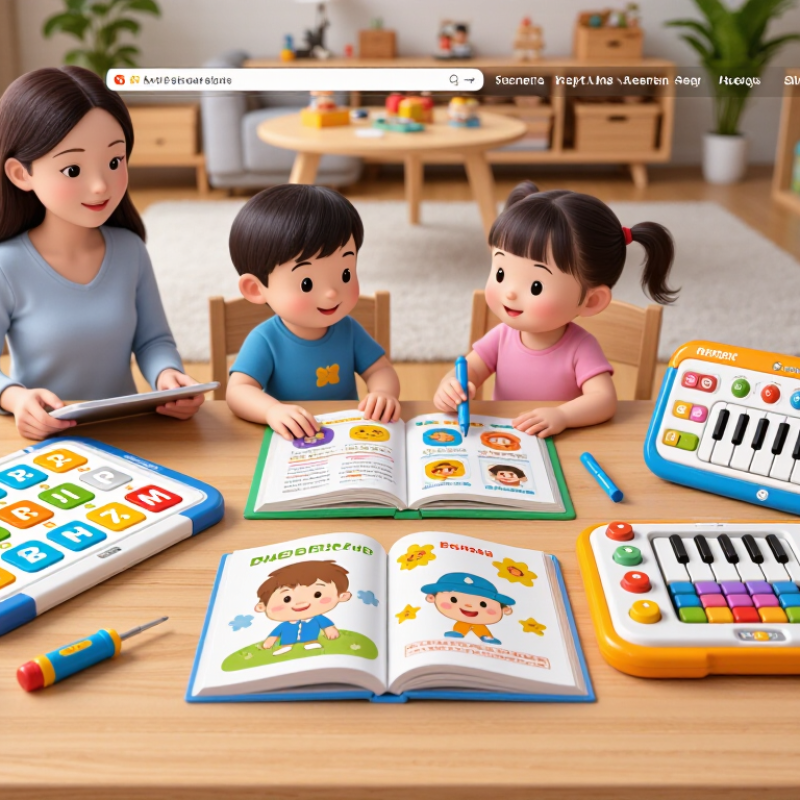
An electronic learning toy uses sound, light, buttons, sensors, or a screen to support a learning activity. Unlike a passive toy, it responds to a child’s actions. A button may trigger a letter sound, while a matching game can give immediate feedback. The electronics are only the tool. Clear instructions and age-appropriate tasks matter more.
Common types include talking books, audio learning devices, interactive puzzles, and beginner coding toys. Talking books can connect printed words with spoken sounds. Audio devices often teach songs, vocabulary, or simple facts through repeatable listening. Puzzles may build shape recognition and problem-solving by responding when a piece fits. Coding toys introduce sequences through buttons, cards, or basic screen-based tasks. Each type serves a different purpose; more features do not automatically mean better learning.
For families comparing options made or sold in China, check the stated age range, language settings, volume control, and durability of buttons and hinges. Look for activities a child can use without constant adult help, but also examine whether the toy encourages conversation and hands-on play. Batteries can run low. Sound may become repetitive. That is worth considering. A toy cannot replace a patient adult, and some products describe their learning benefits more confidently than the evidence supports.
China’s toy exports reached US$39.4 billion in 2023, reflecting the scale of its manufacturing network. That figure covers toys broadly, not electronic learning toys alone. It should not be treated as a category-specific forecast.
For educational electronics, sourcing decisions often begin with practical details: age range, language options, battery type, sound level, and learning goals. Request sample units, clear component specifications, and relevant test reports. Check how easily children can press buttons, read labels, and replace batteries. Small design choices matter. A speaker that sounds clear in a quiet office may feel harsh in a classroom.
China’s export scale can provide access to established component and assembly networks, but it cannot guarantee consistent quality or short lead times. Compare production samples, then confirm packaging, inspection points, and shipment schedules in writing. Keep room for revisions. It may seem inefficient. Still, another review can catch unclear instructions or weak hinges before a large order ships. Trade statistics offer useful context; supplier-level evidence should guide purchasing decisions.
For families comparing electronic learning toys in China, age and play style matter more than flashy features. Children aged three to five often benefit from simple smart toys with large buttons, clear sounds, and short activities. Look for sturdy parts, easy-to-clean surfaces, and age guidance that matches a child’s coordination. A toy that responds slowly can quickly lose a preschooler’s attention. Small steps matter.
For ages six to eight, beginner STEM kits can turn everyday questions into hands-on play. A child might build a simple circuit, test a paper bridge, or watch a small motor spin. Choose kits with clear instructions and parts that are easy to handle. Coding robots suit children ready to follow sequences and fix mistakes. Start with a few commands, then let them change the route. Not every child clicks with coding.
Older children may enjoy smart toys that combine sensors, puzzles, or basic programming challenges. Check whether the toy needs an app, an internet connection, or frequent charging before buying. Clear privacy information and dependable customer support are useful signs of a thoughtful product. A kit can look impressive online yet feel frustrating at home. If possible, compare the setup steps and activity examples before choosing.
What Are Electronic Learning Toys China Best Options
How to Check Safety: GB 6675 Standards, Materials, Batteries, and Age Labels
When comparing electronic learning toys made in China, treat safety checks as part of choosing the right option, not an afterthought. Ask the seller for a recent test report identifying the exact model and applicable GB 6675 requirements. A logo or vague “compliant” claim is not enough. Match the model number on the paperwork to the package. Small mismatch? Pause and ask.
GB 6675 covers toy safety, including mechanical and physical hazards, flammability, and the migration of certain elements. Inspect seams, edges, and small attachments; gently tug buttons and decorative pieces. Materials should have no sharp burrs, peeling coating, or strong chemical odor. Odor alone cannot prove a hazard, though. Check that the battery compartment has a secure fastener and batteries cannot fall out during ordinary handling. Keep button batteries away from children.
Age labels should reflect the toy’s risks and a child’s abilities, not just its colors or learning claims. Read warnings about small parts, supervision, and battery replacement. Compare the box, instructions, and product listing. They should agree. If a toddler can open the case or reach a battery, skip it. Even careful checks have limits: paperwork may be incomplete, and a quick inspection can miss hidden defects. Choose a seller who answers specific questions and provides traceable documentation.
How to use this chart: The bars count suggested checks listed here; they are not test results, compliance scores, or legal limits. Check which parts of the GB 6675 toy-safety standards apply to the product, and ask for relevant test documentation. GB 6675.1 covers basic code, GB 6675.2 mechanical and physical properties, GB 6675.3 flammability, and GB 6675.4 migration of certain elements. Also review material information, battery security and instructions, and age labels and warnings.
How to Compare Learning Value, Durability, Connectivity, and Total Cost
When comparing electronic learning toys made in China, look beyond bright screens and long feature lists. A useful toy should help a child practice a clear skill, such as matching shapes, recognizing sounds, or solving simple number problems. Ask for a demonstration of the activity, not just a product description. Check whether the difficulty can grow with the child. Some toys promise a lot, but hold attention for only a few days.
Durability matters during everyday play. Examine casing seams, button feel, battery access, and whether the toy still works after repeated use. If possible, request sample units and test them with children under supervision. Connectivity also deserves a careful check: confirm what the toy connects to, whether an app is optional, and how updates are handled. A wireless feature can be convenient, but it may add setup trouble. That part is easy to underestimate.
Tips: Compare the full landed cost, including sample fees, packaging, shipping, and likely replacement parts. Ask suppliers for written specifications and test reports that match the exact model. Test language settings and connection stability yourself; a brief video call is not enough. Keep a small allowance for defects. Even careful checks cannot remove every surprise.
China exported US$39.4 billion in toys in 2023. This shows manufacturing scale, not a forecast for educational electronics.
For ages three to five, look for large buttons, clear sounds, sturdy parts, and short activities. Check that the age guidance fits the child’s coordination.
Beginner STEM kits can offer hands-on tasks, such as building a simple circuit or testing a paper bridge. Coding robots may suit children ready to follow and adjust basic commands. Not every child enjoys coding.
Check whether the toy needs an app, internet access, or frequent charging. Review its privacy information and customer support before buying.
Ask for a demonstration of a specific activity, such as matching shapes or solving number problems. Check whether the difficulty can grow with the child. Long feature lists prove little.
Examine the casing seams, buttons, and battery access. If possible, request samples and test them through repeated play. Small hinges can become weak spots.
Confirm what the toy connects to, whether an app is optional, and how updates work. Test language settings and connection stability yourself. A short video call may not reveal setup problems.
Include sample fees, packaging, shipping, and possible replacement parts in the landed cost. Request written specifications and test reports for the exact model. Keep some allowance for defects; careful checks cannot prevent every surprise.
This guide explains what are electronic learning toys and how they combine play with learning through features such as interactive feedback, puzzles, building activities, and basic coding tasks. It outlines common options, including STEM kits, coding robots, and connected smart toys, and considers how each may suit different ages, interests, and stages of development. China’s reported US$39.4 billion in toy exports in 2023 provides context for the range of products and sourcing choices available to buyers.
Choosing a suitable toy involves more than comparing its features. The guide highlights checking age labels, materials, batteries, and relevant GB 6675 safety requirements, as well as weighing educational value against durability, connectivity, and total cost. These considerations can help families and buyers select engaging products that fit their needs while prioritizing safe, practical, and age-appropriate use.

FourE Toy