2026 Top Electronic Learning Toys for Child Development?

Time:2026-11-08 Author:Isabella
0%

Choosing an electronic learning toy in 2026 means looking beyond bright lights and catchy sounds. A toy may introduce letters, invite a child to match shapes, or prompt a toddler to press a button and hear a new word. These small interactions can encourage curiosity, practice, and shared conversation. But does every “educational” label reflect meaningful learning? Not necessarily. Parents need clear guidance on age fit, safety, accessibility, and whether a toy leaves room for a child’s own ideas.

So, how do electronic learning toys support child development? The answer depends on the child, the design, and how adults use the toy. Dr. Michael Yogman, a pediatrician and lead author of an American Academy of Pediatrics clinical report on play, wrote: “Play is not frivolous: it enhances brain structure and function and promotes executive function.” That principle offers a useful lens for evaluating electronic toys. Look for activities that encourage problem-solving, language, or turn-taking—not just repeated button pressing. A caregiver asking, “What do you think happens next?” can turn a simple sound toy into a moment of connection.

Still, toys are tools. They do not replace responsive adults, outdoor play, or quiet time with blocks and picture books. Some devices also move too quickly, leaving little space for reflection. This guide explores standout electronic learning toys for 2026, while considering what they actually invite children to do. The best choice may be less flashy than expected.
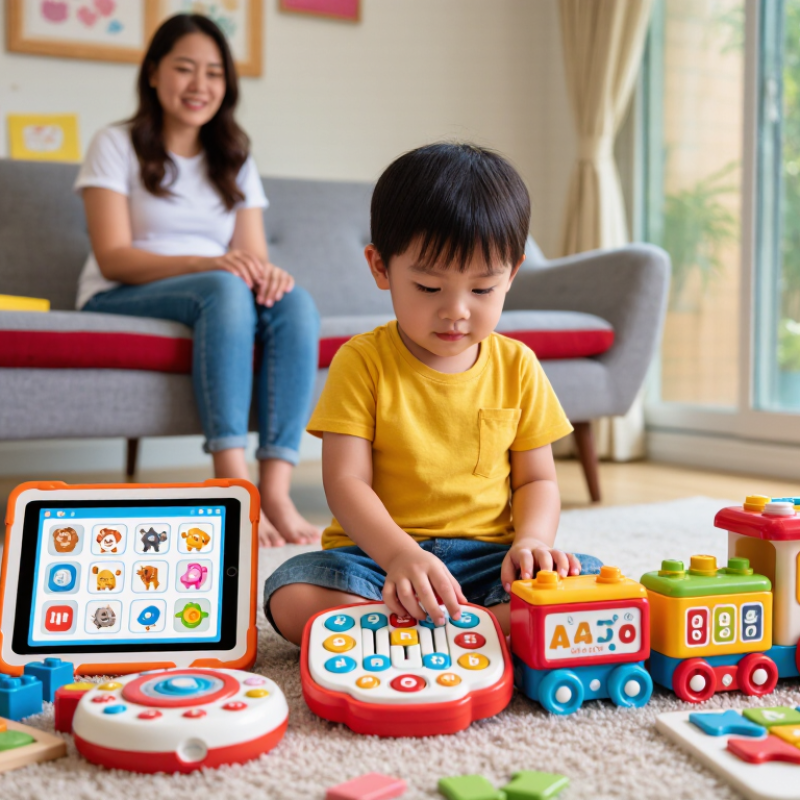
2026 Top Electronic Learning Toys for Child Development?

What Electronic Learning Toys Are and How They Support Learning

Electronic learning toys use buttons, sounds, lights, or simple screens to invite children to interact. A toy may respond when a child matches shapes, presses a key, or sorts pieces. This feedback helps children notice cause and effect. Some activities introduce counting, letter sounds, colors, or everyday problem-solving. Others encourage hand control as children turn knobs or fit pieces into slots. The toy itself does not teach everything. A caregiver’s questions and conversation can help connect play to real experiences, such as counting apple slices at snack time.

Tips: Choose activities that suit the child’s age and current interests. Check volume settings, sturdy parts, and privacy options for connected toys. Keep play sessions flexible.

A good learning toy offers a clear challenge without doing every step for the child. If it gives the answer immediately, the child may have little reason to try again. If it is too difficult, frustration can replace curiosity. Watch how the child responds: do they explore, repeat an action, or ask for help? Adjust the activity or play together when needed. Even a well-designed toy may lose its appeal quickly. That is normal; play should include quiet, hands-on toys and unstructured time, too.

Key Developmental Skills These Toys Can Encourage

Key Developmental Skills These Toys Can Encourage

Electronic learning toys can invite children to practise language, problem-solving, memory, and hand-eye coordination. A preschooler might match a spoken color to a button, then explain the choice to an adult. That conversation matters: the toy can prompt learning, but it cannot replace responsive play. The American Academy of Pediatrics emphasizes that young children learn best from meaningful interaction, not passive exposure to screens.

The Common Sense Census: Media Use by Kids Age Zero to Eight reported that U.S. children ages 0–8 averaged 2 hours and 24 minutes of screen media daily in 2020. That figure covers many kinds of media, not learning toys alone, but it is a useful reminder to choose deliberately.

For ages 2–4, the World Health Organization recommends no more than one hour of sedentary screen time per day; less is better. Look for toys that invite a child to speak, build, sort, or move—not just tap for rewards. Keep the sound low and sit nearby. Ask, “What do you think happens next?” Some toys promise more than they deliver. Watch how your child actually uses one, and be ready to put it away.

Types of Electronic Learning Toys by Age and Learning Goal

For infants and toddlers, choose electronic toys with large buttons, clear cause-and-effect, and calm sounds. A caregiver’s voice matters more than flashing lights. Common Sense Media’s 2020 Census reported that children aged zero to eight averaged 2 hours and 24 minutes of screen media daily. That figure covers screens, not every electronic toy, but it makes balance worth considering. Keep play hands-on.

For ages three to five, look for toys that invite naming, counting, matching, and pretend play. A talking toy can prompt a child to describe a red block or predict what comes next. For ages six to eight, simple coding, construction, and problem-solving toys can support persistence and planning. Choose adjustable difficulty and open-ended tasks; a toy that only rewards fast answers may frustrate some children. Age labels help, but they cannot predict every child’s interests or readiness.

Tips: Play together at first, then let the child explore. Keep volume low and sessions brief. Ask, “What could you try?” rather than giving the answer. And check whether the toy still works without its screen or sounds.

2026 Top Electronic Learning Toys for Child Development

Age-based screen-time context for choosing electronic learning toys

How to use this chart: For children under 2, prioritize screen-free play such as grasping toys, stacking cups, and simple cause-and-effect toys. For ages 2–4, interactive toys can support language, music, or early problem-solving when used together with an adult. Keep total sedentary screen time within the limits shown; less is better.

Chart data: WHO Guidelines on physical activity, sedentary behaviour and sleep for children under 5 (2019). Limits refer to sedentary screen time per day, not specifically to educational toys.

Features to Compare When Choosing a Toy in 2026

Choosing an electronic learning toy in 2026 means comparing what a child does, not how many buttons it has. Look for a clear skill goal, such as matching sounds, sorting shapes, or practicing turn-taking. Check whether the challenge grows with the child, without turning every mistake into a burst of noise. Small detail. Volume controls should be easy for an adult to reach. The World Health Organization’s 2019 guidelines recommend no sedentary screen time for infants under one. For ages two to four, the recommendation is no more than one hour daily; less is better.

That guidance makes screen exposure, audio, and adult participation useful comparison points, not automatic deal-breakers. Common Sense Media’s 2020 Census found that U.S. children ages zero to eight averaged 2 hours, 24 minutes of screen media daily. That figure covers all screen media, not toys alone. Compare whether a toy encourages conversation, movement, or shared play, and whether it works without an app. Check battery access, washable surfaces, readable instructions, and speech clarity in a noisy room. Try it together. Watch for frustration. One caveat: a toy may promise adaptable challenges yet repeat the same task too often. Reports describe populations, not your child; a feature that engages one learner may distract another.

How to Use Electronic Learning Toys Safely and Effectively

Electronic learning toys work best as conversation starters, not substitutes for adult attention. Sit beside the child, name what appears, and connect it to a real object: “That red bus turns left.” Pause for the child’s answer. Small pauses matter. A toy may promise advanced learning, but a child might simply enjoy pressing one button. Observe before deciding it helps.

For screen-based toys, follow age guidance and keep sessions brief. The American Academy of Pediatrics’ “Media and Young Minds” guidance recommends high-quality content with an adult for children aged 18–24 months, and no more than one hour daily for ages 2–5. Treat that limit as a ceiling for all screen media, not a target for one toy. Stay nearby.

Physical checks matter too. The U.S. Consumer Product Safety Commission estimated 231,700 toy-related emergency-room injuries among children under 15 in 2023. Check age labels, loose parts, cords, battery covers, and volume before play. Keep small detachable pieces away from children under three, and inspect toys after drops or chewing. Put charging devices out of reach. Stop using a toy if its casing cracks or it heats unusually. Some trial and error is normal, but supervision should not be optional.

2026 Top Electronic Learning Toys for Child Development? – How to Use Electronic Learning Toys Safely and Effectively
Age Range Electronic Toy Type Developmental Skills Practical Use Safety Guidance How Adults Can Make It More Effective
Birth to 18 months Simple sound-and-light toys, audio toys, or electronic toys without a screen Cause and effect, listening, sensory exploration, and early interaction Use briefly during supervised play. Choose a small number of simple, responsive features rather than constant lights and sounds. Screen media is generally discouraged for children under 18 months, except video chatting. Check for age-rated parts, secure battery compartments, and safe sound levels. Talk, sing, imitate sounds, and take turns. The toy should support interaction with a caregiver, not replace it.
18 to 24 months Simple interactive apps or screen-based learning toys with clear, age-appropriate activities Early vocabulary, matching, listening, and simple problem-solving If introducing screen media, select high-quality content and use it together. No specific daily screen-time allowance is established for this age range. Avoid leaving a child to use a device alone. Keep screens away during meals and before sleep, and choose content without distracting autoplay where possible. Name what appears on screen, connect it to real objects, and pause for the child to respond. Repeating an activity together is more useful than passive watching.
2 to 5 years Interactive storybooks, beginner coding toys, electronic puzzles, and educational apps Language, early numeracy, sequencing, memory, and flexible thinking For screen media, aim for no more than 1 hour per day of high-quality content, with less being preferable. Screen use should not displace sleep, active play, or social interaction. Choose content suited to the child’s age and supervise use. For toys with small parts, follow the age label; small parts can be a choking hazard for children under 3. Ask open-ended questions, encourage the child to explain choices, and follow screen activities with hands-on play such as drawing, building, or pretend play.
6 to 8 years Programmable robots, electronic science kits, digital music tools, and logic games Planning, creativity, early computational thinking, persistence, and collaboration Use the toy for a defined project or activity. Balance device use with outdoor movement, reading, sleep, and face-to-face play. Use products as directed, supervise tools or components that require adult help, and keep charging cables and batteries out of reach when not in use. Let the child try, make mistakes, and revise their approach. Ask them to describe how the toy works rather than completing challenges for them.
9 to 12 years Robotics kits, coding platforms, electronic construction sets, and digital creation tools Systems thinking, design, reasoning, self-directed learning, and teamwork Set clear expectations for when and where devices can be used. Prioritize active creation and projects over extended passive screen viewing. Review online features and privacy settings together. Use age-appropriate accounts and keep devices updated according to the manufacturer’s instructions. Encourage a project with a real-world purpose, such as designing a model or composing music. Discuss what the child learned and what they would change next time.
All ages Any electronic learning toy Learning is strongest when play is safe, engaging, and connected to real-life experiences Choose toys for the child’s interests and abilities. Electronic features do not automatically make a toy educational. Follow the product’s age and care instructions. Inspect toys regularly for damage, loose parts, exposed wires, or battery access; keep button batteries securely contained. Use the toy as one part of a varied play routine that includes conversation, books, movement, creative play, and time with other people.

FAQS

What are electronic learning toys?

They use buttons, sounds, lights, or screens to invite children to interact. A toy might respond when a child matches shapes or presses a key.

How can these toys support learning?

They can introduce counting, letter sounds, colors, and simple problem-solving. Turning knobs or fitting pieces into slots also gives small hands practice.

What should I look for in a toy for a baby or toddler?

Choose large buttons, sturdy parts, and clear cause-and-effect. Calm sounds help. A caregiver’s voice often matters more than flashing lights.

Which toys may suit children ages three to five?

Look for naming, counting, matching, and pretend-play activities. For example, ask a child to describe a red block or guess what comes next.

What can work well for children ages six to eight?

Simple coding, construction, and problem-solving activities can encourage planning and persistence. Adjustable challenges help, though age labels cannot predict every child’s interests.

How much screen time should I consider?

Guidance recommends no sedentary screen time for infants under one. For children ages two to four, it suggests no more than one hour daily; less is better.

How can I tell whether a toy is a good fit?

Watch the child play. Do they explore, repeat an action, or ask for help? If they seem frustrated, adjust the activity or join in.

What practical features should I check before choosing?

Check volume controls, battery access, washable surfaces, readable instructions, and clear speech. Try it together. Also see whether it works without an app.

What if the toy quickly loses its appeal?

That is normal. A toy can become boring by Tuesday. Keep hands-on toys and unstructured play in the mix; electronic toys cannot do every job.

Conclusion

Electronic learning toys combine play with interactive features such as sounds, lights, touch controls, and simple digital activities. When thoughtfully designed, they can encourage children to explore ideas, practise new skills, and learn at a pace that suits them. This overview explains how do electronic learning toys support child development, including opportunities to build language, early math, memory, problem-solving, creativity, coordination, and social skills.

Different toys may suit different ages and learning goals, from sensory play for younger children to more challenging puzzles and learning games for older children. When choosing a toy in 2026, caregivers can compare age suitability, educational value, ease of use, durability, adjustable settings, and the amount of screen or sound stimulation. Safe, effective use also matters: follow the toy’s instructions, supervise play when appropriate, balance electronic activities with hands-on play and rest, and join in to help children connect what they learn with everyday experiences.

Isabella

Isabella

Isabella is a dedicated marketing professional with a sharp focus on driving brand growth and engagement through strategic content creation. With an extensive background in digital marketing, she combines her passion for storytelling with her keen understanding of industry trends to deliver......